Journal
Made in Europe clothing: what does the label actually tell you?
22 Jul 2026 · Updated 17 Oct 2026
A garment can be designed in one country, sewn in another and printed in a third. ‘Made in Europe’ sounds simple, but it does not tell you which of those steps happened where. For a thoughtful purchase, start with the individual product rather than a slogan about the whole brand.
Design, garment and print are different questions
KALEW draws on Estonian stories, ships to selected EU countries and works with Printful for fulfilment. Printful operates facilities in several regions and selects a centre for each order according to availability and printing method. This does not establish the printing country in advance for every KALEW order.
The blank garment's manufacturing origin is a separate question. Printful says to check the Source tab in its product catalog for that information. A broad ‘Made in Europe’ statement does not prove that fabric, sewing, printing and packaging all happened in Europe.
What to check before you buy
Look at the garment's material and fit, available sizes, product photos, delivery estimate and returns policy. If you want to know where an item was made or printed, ask for those details for the exact product and size. This is more useful than guessing from a label on a blog post.
Made-to-order fulfilment may mean an item is prepared after purchase. It does not automatically mean a short delivery time or a particular country of manufacture. When buying a gift, allow time for both production and shipping, and confirm the recipient's size.
The KALEW approach
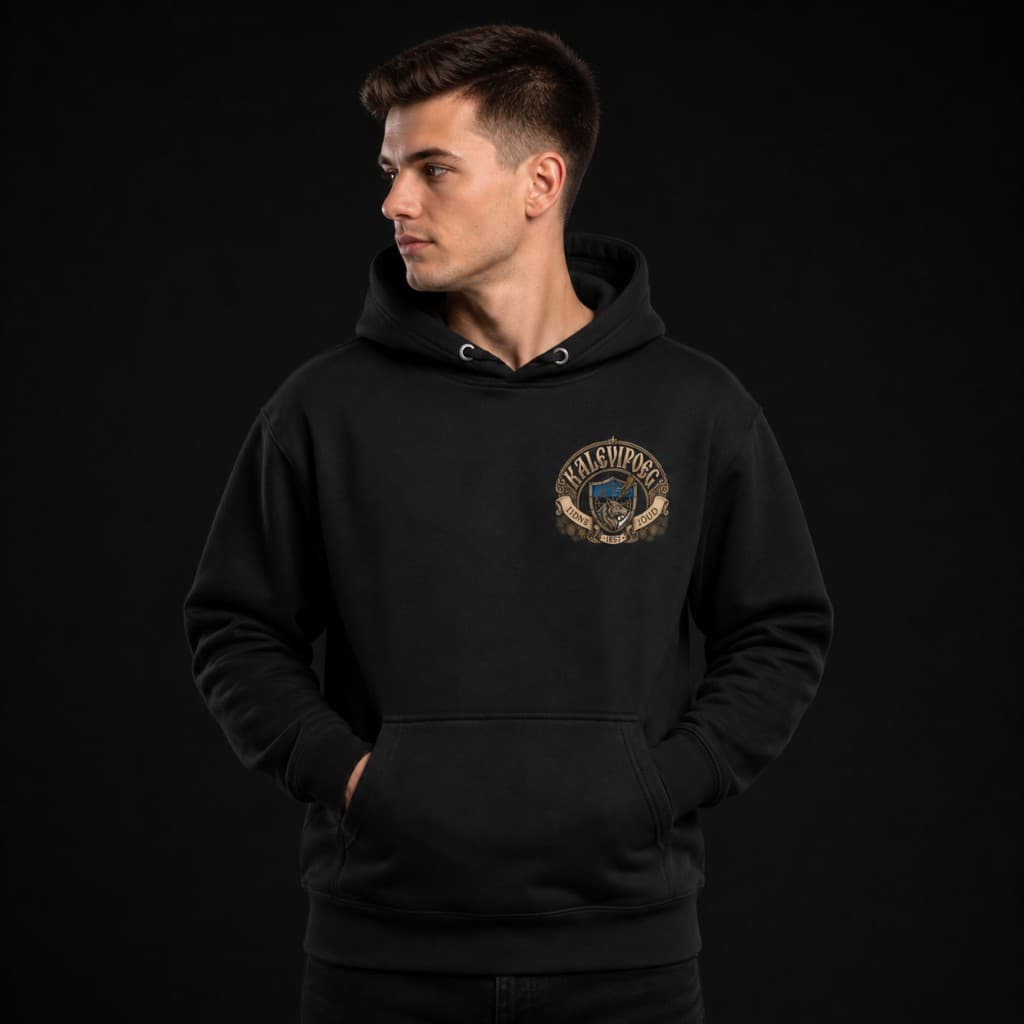
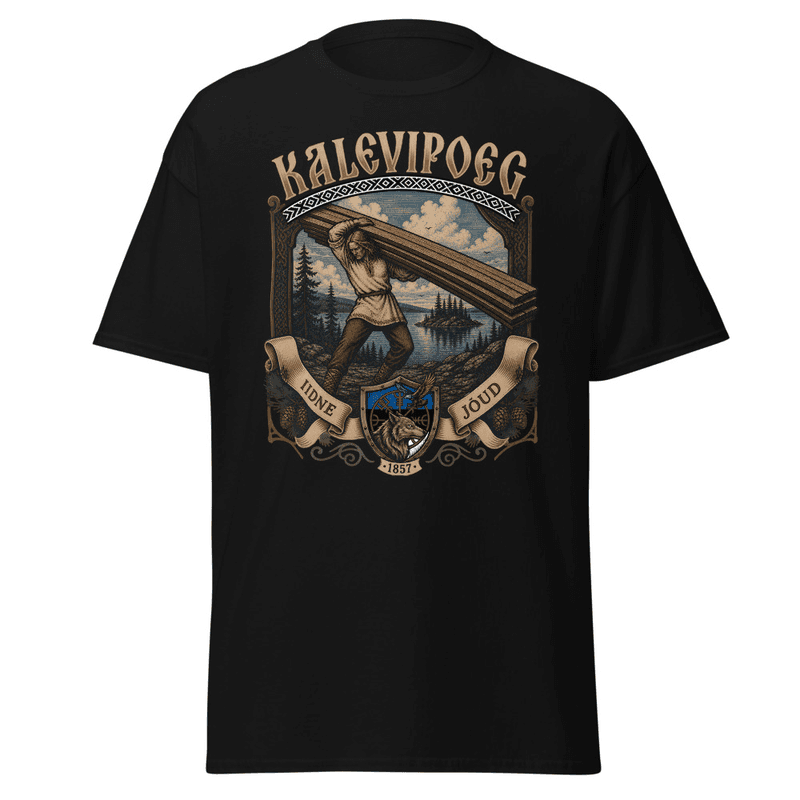
The story of Kalevipoeg can give a garment meaning, while practical details help you decide whether it suits your everyday life. We want those two parts to sit together: a design you connect with and enough information to make a confident choice.
Explore the collection
Open a product page to check sizes, price and delivery. Ask us about the print method or origin if either is essential to your choice.